
For our August COP member profile, we got to know Văn Minh Nguyễn, a PhD candidate at the Hanoi University of Public Health and researcher working on a study to cost the delivery of COVID-19 vaccines in Vietnam in collaboration with ThinkWell.
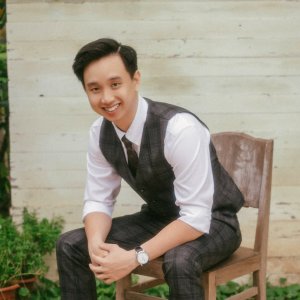 Can you tell us a little bit about yourself? My name is Văn Minh Nguyễn. At the moment, I’m a researcher at Center for Population Health Science at the Hanoi University of Public Health. The University of Public Health is one of the top institutions in Vietnam in public health and we work in many fields.
What do you work on at the university? I finished my master’s degree in health economics and I’m working mostly on health economics issues, such as the costing of programs and interventions or conducting health technology assessments. For example, if pharmaceutical companies have a new drug that costs a lot like cancer drugs, they need economic evidence to see how cost-effective their products are. Later they can submit this figure to social health insurance to have their product considered for coverage.
How did you get started in immunization economics? This COVID-19 vaccine delivery costing project is my first major costing study. Generally speaking, I am quite immature in the field and this project came to me coincidentally because it was proposed to our university, and I was part of the program. The other half was myself! I kind of volunteered to participate in this project as well because I know that in order to proceed well in my research studies, being able to conduct a well-done costing study is essential. Costing is one of the important elements of an evaluation.
What do you like most about what you do? One of the biggest advantages of this study is the huge amount of experience in methodology and conducting research because I was involved from the beginning. So, I got to go through all of the steps in developing and designing the study and coming together with all of the stakeholders to proceed with the program. So, that is one work-related experience. I also think my exposure to health staff in Vietnam is very valuable and special. COVID-19 is a unique disease, and the burden of the disease on the health care system and health staff in Vietnam is enormous and unprecedented.
While doing data collection and qualitative interviews, I get to hear stories from health staff regarding difficulties and also what is effective during vaccination campaigns, it’s kind of a personal experience. I have huge empathy for Vietnamese health staff after these short interviews.
Where do you hope your career takes you? I want to be one of the experts in my field and would love to have more exposure to data analysis, which I enjoy, or maybe the modeling side of health economics because I feel I am good with numbers.
Do you have any tips for aspiring health economists? Within this field, the experience and products of research are very satisfying because we can see the value of studies and impacts, both short term and gradually. Health economics or costing in general contributes to more efficient use of resources especially in low- and middle-income countries.
So, when I’m working with, say, cancer drugs, I usually see high-cost drugs, but when we finish the evidence, we contribute to the process of covering the drugs via health insurance which will increase accessibility for cancer patients. I have a little experience working in an oncology hospital in Vietnam, and I had some short conversations with some of the patients and usually they are in very difficult situations. I get satisfaction from the work and seeing that it is meaningful, so I think a tip would be to be true and to have integrity as a scientist to produce the best and reliable work for the field.
How do you like to spend time outside of work? My free time outside of work is usually spent with a few people. I usually go out with my wife, and we like eating out or having coffee in the afternoon. Coffee culture is huge in Vietnam, so we have many coffee shops with beautiful plants and decorations. On weekends, I try to visit my parents and parents-in-law for dinner or lunch.
I recently got caught up with this hobby which involves customizing computer keyboards to my own preference. I got maybe five to ten keyboards, so my wife recently cut me off from the hobby because she thinks maybe I’m spending too much money on these things! This is a good hobby because it requires patience and also an eye for detail to make everything as perfect as possible.
What is your favorite family or cultural tradition? I think similar to most of the cultures in the world, the New Year holiday is a very big celebration, it is a very special and important tradition for my family, so that is a time when we can kind of leave out most of the stress of life, and we just gather for a few days celebrating and have all of the events, the traditions coming with it. It reflects, I think, one of the most important characteristics of a person in Vietnamese culture. Also, it’s a time to appreciate previous generations sharing love with parents, grandparents, cousins, other family members. So, I think it’s a very rich tradition of Vietnamese people.
Where are you based and what would you recommend to a visitor? At the moment I’m based in Hanoi. I know that Hanoi is a spot for tourism; growing up here, I recommend people maybe try to visit this city once because we have rich Asian culture. My friends like the vibe, the people, how the city is, the fast pace of the city. But there are still some places that you can feel the pace of life is very slow. For example, we have many parks in the city, and like I said we have this huge coffee culture, I think if anyone is a coffee lover, they really should try Vietnamese coffee once.
How do you take your coffee? I know that in other countries, like in Europe, people usually have sugar or maybe milk with their coffee, but in Vietnam we have something called condensed milk. It’s milky but also very sweet, so usually we would have what we call in Hanoi, brown coffee. It’s black coffee with condensed milk.
Are you interested in being featured in a future newsletter? Or would like to nominate another member? Please email immunizationeconomics@thinkwell.global with your suggestion and a brief description of your or their work. We are specifically interested in spotlighting the work and profiles of country researchers working on immunization economics.