
Lili Nur Indah Sari is a Senior Program Officer for the CHAI Indonesia Vaccine Program and presented some of her research at our IHEA pre-congress session. Read what she thought of the event and the learnings she can take back to her work at home. You can also view the poster Lili presented on costing, planning, budgeting, and resource mobilization for immunization in Indonesia’s decentralized setting.
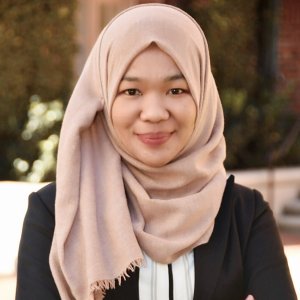
I started as a Gavi transition program officer, understanding the immunization financing landscape in Indonesia and other transition countries. Currently, I focus on new vaccine introduction (NVI), including PCV introduction and, now, rotavirus introduction in Indonesia.
I provide evidence for decision-making, such as rotavirus cost-projection analyses from introduction to scale-up. Subnationally, I am conducting an analysis to estimate the non-incremental costs for non-vaccine related analysis. I am also preparing scenarios for the upcoming plan to switch rotavirus vaccines, including the costs related to the switch and the implications at the operational level for district health facilities.
What was your career journey before CHAI?
I started my career as a researcher for National Health Account production in Indonesia, specifically on health care financing and expenditure analysis. I then continued my studies in public policy, specializing in health economics and policy.
I found my way to immunization economics when I started to understand the implication of Gavi transition for Indonesia. My job at the time was to map out our level of both financial and programmatic dependency for immunization programs. Later, I supported a new vaccine cost projection analysis including developing the comprehensive multiyear plan for immunization. This was an interesting field as Indonesia is so ambitious in simultaneous vaccine introduction and national scale-up, and being able to support decision-making is critical at this point in Indonesia.
Based on your experience, do you have anything you’d like to share with health economists just beginning their careers?
I still feel like I’m just starting out; I’m still learning a lot! Health economics is a big area of work and there are so many sub-fields. I would tell anyone to dig a little deeper to find what they are really interested in and find people who like the same things. In vaccine economics, I found that building networks is important. Collaborating with other experts like pharmacists, epidemiologists or mathematicians helps us produce good evidence.
What did you think of the Immunization Economics IHEA pre-congress in Cape Town?
I felt a strong connection to the community of practice, the main ingredient to strengthening the immunization economics area of research. This kind of network helps to avoid duplicative work across countries and share lessons learned and best practices.
A key theme was that it’s important to translate our findings into real policymaking. I often find there is a disconnect between research and policymaking demands. Involving policymakers means that we have to put our findings in simple terms so that they can digest our data.
Finally, it is vital to incorporate costing exercises into planning, budgeting, and financing mechanisms and public financial management. The goal of costing is to ensure that immunization activities can be securely funded.
It sounds like you learned quite a bit; what sessions did you enjoy the most?
The first was the session on immunization financing, specifically the discussion around budget execution and operational costs. I learned that inadequate budget allocation and release of funds, especially at the subnational level, is a major reason for delay and inability of EPI officers to conduct outreach in a timely manner and reach target coverage. This is happening in Indonesia, too, but the big discussion around immunization financing is often vaccine costs and rarely operational costs as they contribute only around 10-20% to immunization costs.
The second session was delivered by WHO on decision support for priority-setting frameworks. I learned about the CAPACITI approach and different decisions made by different countries using this approach, such as NVI prioritization and vaccine switches. This information will inform a lot of upcoming NVI-related decisions in Indonesia.
The third session I enjoyed most was based around a Uganda case study on the implementation of an electronic health information system to reach zero-dose children. This was found to be costly, so we discussed options for using more integrated approaches in the current system and explored how to incorporate new vaccines into regular vaccine circuits to make them more accessible and sustainable. We even talked about using drone technology to locate zero-dose communities!
How will you use this knowledge in your work in Indonesia?
My current responsibility is to support the subnational government to have sufficient, sustained, and reliable domestic resources for immunization programs. I can adapt some of the methodologies introduced in other countries to provide technical capacity for immunization costing and translate evidence for planning and budgeting.
The presentation from Ghana on tracking the immunization budget credibility is very related to what I did in Indonesia, looking at how a low budget can affect coverage in certain areas, and the need for advocacy around that.
In my work we also support the local government to increase resources for immunization at the subnational level. In the past several years many vaccines have been introduced in Indonesia, including HPV and PCV national scale-ups, so I can consider some of these recommendations there, too. One of the speakers explained how to understand where immunization could fit into a subnational health financing mechanism and the importance of awareness around the health budget planning process and cycle, which contributes to timely and effective financing.
Developing the capacity to strengthen local government workers, like EPI officers, was another idea presented to ensure allocated resources are enough to execute all key immunization activities. I know I can adopt a lot of this into our focal areas in Indonesia.
I wanted to give you a chance to get a little more creative, so could you describe the pre-congress in three words?
I’m going to consider well-organized one word. I really appreciated how the community organized different sessions and how institutions presented their work, it was really accessible information.
My second word is insightful. This was my very first IHEA in person, so having the chance to be in the same room as attendees and hear their learnings and opinions from them directly was very enlightening.
My third word is excellent. There was such a strong feeling of community. A friend who attended another pre-congress session remarked that the Immunization Economics pre-congress session was such a large and diverse community, both in geographic and institutional affiliation. In that moment, I was very proud to be in this community of practice.
Moving from work to your life beyond immunization, how do you like to spend your free time?
I am actually quite a home person. I like being at home because this work requires that I travel a lot to districts to meet local EPI officers. During my weekends, I am mostly at home—I recently started painting by numbers—and sometimes I will meet friends.
Where would you recommend a visitor to go in Indonesia?
My hometown, Bukittinggi, in West Sumatra is touristy so you can cover it all in one trip! We have mountains, lakes, valleys, tasty food, historical sites, and cultural events, and people are friendly…And travel is also good for the economy!
Are you interested in being featured in a future newsletter? Or would like to nominate another member? Please email immunizationeconomics@thinkwell.global with your suggestion and a brief description of your or their work. We are specifically interested in spotlighting the work and profiles of country researchers working on immunization economics.