
We recently met with Ajit Karna, a One Health professional from Nepal, trained in veterinary microbiology, epidemiology, and global health. Ajit has worked in both Nepal and Botswana in the immunization landscape.
Welcome Ajit. You have supported the development of the National Immunization Strategy (NIS) in Nepal. Can you tell us more about this?
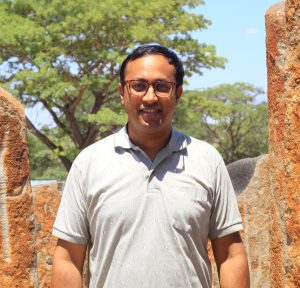
The comprehensive multi-year plan (cMYP) for immunization in Nepal ended in 2021, and instead of developing a new plan, the guidancefrom the global community including UNICEF and WHO was for the Government of Nepal to develop a more strategic plan – the NIS. This was met with keen interest from the government and I was hired as a consultant by the World Health Organization to develop the NIS. I costed the activities in the NIS, worked on budgeting, and performed financial analyses. One thing of importance to me was using the one-health approach, an intersection of human health, animal health, and environmental health, when drafting the strategy. This helped marry the NIS with the national antimicrobial resistance (AMR) plan.
What was the approach used for costing and financial analysis?
After the NIS strategic framework was drafted, we selected and prioritized the activities to support the interventions for the five-year period – 500 activities altogether! We used the NIS.Cost App to calculate the cost for each activity, considering the unit cost, volume, and timeline. I then compared to the available annual budgets to better understand long-term funding gaps overall and across the programmatic components.Since I worked with the costing tool extensively, I wanted it to be user-friendly not only for me but also for other users, so I worked with the costing tool developer to improve its functionalities.
How is the NIS used for resource mobilization efforts?
Once the activities were costed and analyzed, the government had something concrete to take back to the Ministry of Finance and advocate for priority activities to be resourced. They also reached out to key donors such as Gavi and USAID. The government recognized that the NIS is a critical national advocacy document for funding the immunization program going forwards.
“Buy–in’ into the NIS is so important. The government needs to own this document, and that is why they need to invest time and energy in developing the strategy and be the ones to bring key immunization program stakeholders across the country to the workshops.”
You have also supported Gavi’s Full Portfolio Planning (FPP) for Immunization Program of Nepal, can you shed more light on this?
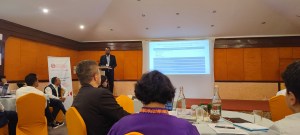
Nepal is a Gavi-supported country, expected to transition before 2030. I worked with PATH as a consultant to draft strategic documents for immunization strengthening for Gavi’s FPP in Nepal. My role was to ensure Gavi funding was aligned with the government priorities listed in the NIS.
What are the current immunization priorities facing the Government of Nepal?
The number one priority is strengthening the routine immunization program – boosting childhood immunizations such as measles-rubella and reaching zero-dose and under-vaccinated communities. There is a big push to do this through enhanced collaborations that go beyond the health sector e.g. Ministry of Agriculture and Livestock Development.
In addition to Nepal, you also provided technical support in the development, costing and budgeting, of the NIS in Botswana. Any lessons learned in Nepal that fed into the work in Botswana?
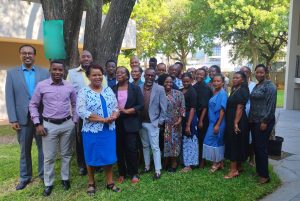
After my NIS experience in Nepal, I went on to provide the same technical support in Botswana. A key learning from my work in Nepal was that country ‘buy–in’ into the NIS is so important. The government needs to own this document, and that is why they need to bring key immunization program stakeholders across the country to the workshops and invest time and energy in developing the strategy. NIS development needs to be a consultative process from start to finish, from thinking about high-level objectives to deciding on activities, their volume, and timeline, to budgetary discussions.
Do you have lessons from Nepal and Botswana that would benefit others that will develop an NIS soon?
Nepal and Botswana are different settings. Nepal is four times smaller than Botswana, but the population is around ten times bigger. Botswana is a non-Gavi country that is self-sufficient in many ways in comparison. But, in both settings, sustainability was the overarching question. It is important to think ahead in terms of how the government can resource the immunization program in the long term, going back to its budget and financial mechanisms and thinking about non-traditional resources that could be mobilized. Other countries who are starting to develop NIS, need to conduct a comprehensive diagnosis of their national immunization program to guide the strategy development, bringing together all activities or programs related to immunization program in NIS, for instance not ignoring the IT infrastructure aspect in the surveillance of vaccine-preventable diseases and integrate activities that consider reducing the AMR burden.
How did you learn about the Immunization Economics Community of Practice and how have you used it in your work?

As I started my journey working on immunization costing and financing, I found the immunization economics website on Google when searching for resources. I actually pulled resources from the Immunization Economics website when working on the NIS development in Nepal and I accessed the NIS.cost.app through the platform.
What else are you working on?
I am interested in the return on investment in health systems, and so I am working on an opinion piece related to leveraging vaccination efforts to reduce AMR – a keen interest of mine. I am also working on a Pandemic Fund project with the Food and Agriculture Organization related to One Health planning and implementation.
Do you have any recommendations for visitors to Nepal?
I would recommend visitors coming to Nepal to go to Madhesh province, which is culturally and historically very rich and different to other parts of Nepal. Janakpurdham is particularly beautiful. Madhesh province is also of interest to the public health community as it has quite weak health infrastructure.
Are you interested in being featured in a future newsletter? Or would like to nominate another member? Please email immunizationeconomics@thinkwell.global with your suggestion and a brief description of your or their work. We are specifically interested in spotlighting the work and profiles of country researchers working on immunization economics.