
This month we met Dr. Moses Simuyemba, public health and M&E specialist with a strong focus on health economics, based in Zambia. We spoke with Moses about his work in immunization costing and financing in Zambia.
Moses, you have been costing human papillomavirus (HPV) vaccine delivery in Zambia. Can you please tell us more about this work?

In 2019, Zambia introduced the HPV vaccine into the Expanded Program on Immunization (EPI), following a demonstration project in one province. The cost of the national HPV vaccine introduction had not been examined. There was a reliance on the cost evidence from the demonstration phase, which has limited transferability. To fill this gap, we carried out a study on the HPV program implementation comparing the cost of the different delivery strategies and derived a cost per dose and per fully immunized child. We found that school-based delivery had the highest vaccination coverage and was the least costly delivery strategy.
How are the study findings being used?
The study was a collaboration with EPI through the Gavi evaluation, focused on sustainability of the EPI program and also sponsored by The UNC-UNZA-Wits Partnership for HIV and Women’s Reproductive Health (UUW). Generating cost evidence on the HPV vaccine program was a priority for the government and they guided the study throughout. The HPV vaccine has a unique target population when compared to other routine vaccines and EPI wanted to understand the cost implications.
The evidence prompted critical discussions on how to make the best use of limited resources. Cost-effectiveness evidence is lacking in Zambia and so far we have relied on evidence from other countries. We have utilized these cost findings to compare the cost-effectiveness of the different HPV vaccine delivery strategies with a ‘HPV screening only’ strategy. This exercise has included evaluating the cost-effectiveness of a three-dose HPV vaccine schedule for individuals who are HIV positive. I am pleased to say this paper is a part of my PhD which is currently undergoing peer review–so watch this space!

What challenges did you find along the way when costing a national vaccination program?
The ultimate challenge was gathering the cost data. We had to be innovative when we ran into data gaps and utilized both activity-based costing and top-down costing approaches to capture available costs. The exercise was a reminder that researchers need to strike a balance between being methodologically sound and costing in a way that makes sense to the context.
What have you learned from being part of the Gavi Full Country Evaluations project?
I have been part of the Gavi Full Country Evaluations project since 2014, in which Gavi has carried out independent evaluations of its programs in Bangladesh, Mozambique, Uganda, and Zambia. As part of this project, we analyzed the availability of fiscal space to sustain the immunization program in Zambia, following Gavi transition. Through Gavi support, several vaccines have been introduced into the EPI, including the pneumococcal conjugate vaccine, rotavirus vaccine, and the HPV vaccine. There has been great concern on what the resource burden would be for Zambia when it transitions from Gavi support. We found that government health spending is weak, but there are efficiency gains that can be made to the immunization program that can widen the fiscal space availability.
“Researchers need to strike a balance between being methodologically sound and costing in a way that makes sense to the context.”
What are the current priorities of the EPI in Zambia?
In the post-COVID-19 pandemic era, the EPI is focused on how to routinize the COVID-19 vaccine and how to capitalize on the gains made during the pandemic. For instance, the surveillance systems in Zambia were strengthened during the pandemic. I am working with UNICEF to evaluate the COVID-19 response to inform future emergency planning.
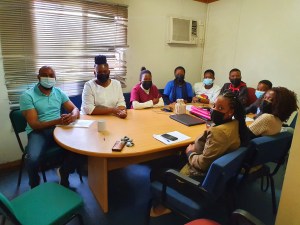
There is also focus on the districts with the highest prevalence of zero-dose children. I am working with EPI to develop a behavioral and social mobilization strategy to reach this priority population. Tackling resistance to immunization, for instance religious barriers, requires special strategies.
Do you have any recommendations for visitors to Zambia?
Most people would say Victoria Falls, as it’s beautiful. We argue with Zimbabwe on who has the best view. If you’re willing to take the less trodden path, my suggestion would be to drive to the Northern province of Zambia. It has wonderful waterfalls along the way and nice game viewing!
Are you interested in being featured in a future newsletter? Or would like to nominate another member? Please email immunizationeconomics@thinkwell.global with your suggestion and a brief description of your or their work. We are specifically interested in spotlighting the work and profiles of country researchers working on immunization economics.