
Hello Sandeep, firstly, can you tell me about your background?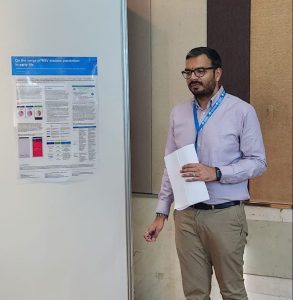
I am a medical graduate, with a specialization in public health. I previously worked for the World Health Organization (WHO) as a Surveillance Medical Officer for the polio eradication program in India. I am currently the Deputy Director of Immunization and Supply Chain Projects for South Asia at PATH, based at New Delhi, India.
You recently conducted an evaluation on the performance, acceptability, and cost of freeze-preventive cold boxes. First, can you tell me what these are and why they are needed?
Accidental vaccine freezing is a persistent challenge for immunization programs. This occurs when ice packs used in standard cold boxes are not conditioned properly during the transportation of vaccines. It significantly damages freeze-sensitive vaccines, reducing the efficacy and increasing the risk of an adverse event following immunization (AEFI). Also, wastage associated with freeze-damaged vaccines has large financial implications for the health system. To address the issue, PATH has supported the development of freeze-preventative cold boxes (FPCB)
Can you elaborate on your evaluation of the use of freeze-preventive cold boxes compared with standard cold boxes in rural Nepal?
PATH, in collaboration with B.P. Koirala Institute of Health Sciences, conducted the first real-world field evaluation of a WHO prequalified FPCB in Nepal. We published an open-source design for manufacturers, conducted in-house testing of the designs, and carried out field evaluation assessments as per the WHO-PQS guidelines.
In the study, FPCBs effectively prevented freezing, while two freezing events occurred with the standard cold boxes. We found the cost of the FPCB to be less than the value of the vaccines prevented from freeze damage, indicating potential value for money. During the evaluation period, an average of approximately 4,000 doses was transported in one cold box per trip. The average value of all vaccines transported per shipment was $2,739, of which an average value of $1,704 (62%) was freeze sensitive vaccines.
“it is important to produce local evidence to demonstrate to policy makers the long-term benefits and potential cost savings of new devices”
What were the policy and programming implications of these findings?
The results were shared with the MOHP and were also presented at international forums (such as TechNet). Following the dissemination, the MOHP has included FPCBs in their program implementation plan and made a request to Gavi to support with procurement. Further, the FPCBs used in the pilot were donated to the MOHP. Health workers in our field evaluation found the FPCBs to be heavier than the standard cold boxes, so we hope this paves the way for future product development of lighter and smaller FPCBs.
You have also evaluated the effectiveness, acceptability, and costs of three new cold chain devices in India. Why do you think it is important to evaluate such technologies?
Resources are constrained in low-and-middle income countries and the procurement of new devices can carry a high price-tag. Yet, these devices can help enhance last-mile delivery to reach missed and underserved populations. So, it is important to produce local evidence to demonstrate to policy makers the long-term benefits and potential cost savings of new devices.
How do you think we as researchers can do better in helping evidence to be translated into policy?
The research should be focused on understanding the real ground needs (for instance relating to last mile or the wider health system) so that the results support the system in the development of robust policy and/or guidelines.
You also supported PATH to examine the cost of national human papillomavirus (HPV) vaccine delivery in six LMICs, where you specifically focused on Sri Lanka. What can we learn from this HPV vaccine delivery costing?
We found a wide range of estimates for the cost per dose across the countries sampled. Though in all countries, the opportunity cost per dose was higher than the financial cost per dose, demonstrating that existing resources were highly leveraged in HPV vaccine delivery. The results from this study are helpful for policy makers in priority setting, planning, and budgeting HPV vaccination programs. The cost evidence can also be used to help inform policy discussions on switching to a one-dose schedule.
What else are you working on?
I have been part of a multi-country study generating cost evidence on the delivery of a maternal respiratory syncytial virus (RSV) vaccination in Nepal. The total delivery costs for the health system were examined including both the financial and opportunity costs. The study results are not yet available, however, I will share the results as soon as they are published. I am also supporting an evaluation of measles and rubella microarray patches in Nepal.
What are your recommendations for visitors to India?
I recommend visiting the mountains in Kashmir, called the mini-Switzerland of India. Goa has very beautiful beaches and is quite lively. I think people will enjoy the food in India, which is very diverse when comparing the north to the south.
Are you interested in being featured in a future newsletter? Or would like to nominate another member? Please email immunizationeconomics@thinkwell.global with your suggestion and a brief description of your or their work. We are specifically interested in spotlighting the work and profiles of country researchers working on immunization economics.