
This month we met with Ali Turab, a medical doctor who is trained in public health. Ali is Director of Global Health at PHC Global in Pakistan. The global health work at PHC Global focuses on designing and implementing studies on newborn health, immunization, and nutrition.
Can you tell us how PHC Global got started in immunization? 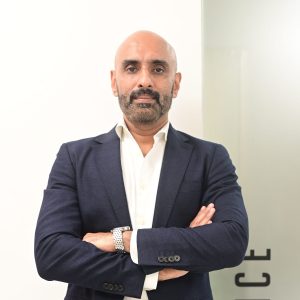
Our journey in immunization research and development at PHC Global started with the typhoid conjugate vaccine (TCV) rollout. The disease burden is huge and the cost of treating typhoid can be catastrophic. There was large government buy-in and donor alignment for TCV to be part of the routine immunization program, and with Gavi financial support, the vaccine was introduced in 2019. To support the introduction, and in collaboration with multiple partners including Departments of Health throughout Pakistan, WHO, and UNICEF, PHC Global has developed training materials for frontline health workers , communication materials, assessed the quality of microplanning and trained local civil society organizations (CSOs) to identify target children. The CSO engagement activities, including community meetings and door-to-door visits, has helped identify over thousands of children who would have otherwise missed TCV.
PHC Global are also examining the cost of reaching zero-dose children in Pakistan, can you shed light on this study?
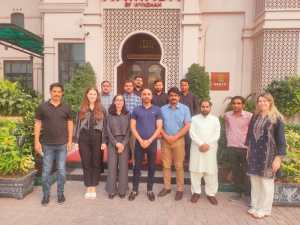
In the past few years, Pakistan has made strides in improving vaccination coverage, however there are large disparities across geographies and large pockets of zero-dose children (children who have not received their routine vaccines). There are special initiatives targeting zero-dose children across the country, conducted by the Expanded Program of Immunization (EPI) department, Polio Eradication Initiative (PEI), and the Integrated Reproductive, Maternal, Newborn and Child Health (IRMNCH) & Nutrition Program. Some initiatives are collaborative efforts between programs. For example, PEI workers are now helping to identify zero-dose children during house-to-house campaigns, and report these children to the EPI. We don’t know how much these initiatives cost to implement in practice and how effective they are in reaching these children. We are currently working with ThinkWell to cost out these initiatives and the routine efforts.
Why is generating economic evidence on this topic important?
Zero-dose children go under the radar – they are more challenging to reach and likely being completely missed by the health system. We know that extensive resources are needed to accelerate the engine to reach this group, and this probably varies for different strategies and geographies. By getting accurate cost data and better understanding what works, we can support better budgeting and potentially scale up best practices. It is helpful to examine potential cost savings and areas for greater efficiencies, for example through integrated delivery. Learnings from this work can therefore also benefit other integration discussions, such as an eventual integration of the PEI into the EPI.
What do you do to help bridge the gap between research and policy?
Between evidence generation and policy change, there is an important step – implementation research. We have found that evidence is often available, right for the taking, and by piloting that evidence in a real-life setting, very closely with the health system, we have more opportunities to help shift policy.
You are also working on a zero-dose learning and story generation project. Can you speak to this work?
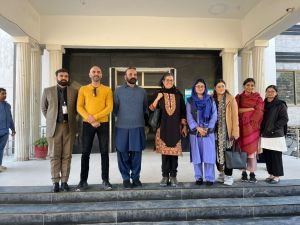
We are working as part of the Zero Dose Learning Hub (ZDLH) to assess the progress of countries on their Gavi zero-dose agendas. It is disappointing to see that a lot of countries have not made much traction, after the large time commitments to develop these agendas. We are examining how we can build the capacity of countries to follow through with their learning needs and facilitate peer-to-peer learning exchanges. For the story generation work, we are carrying out rapid reviews from 52 countries to gather insights into the demographics of zero-dose children.
What are other immunization priorities facing the Government of Pakistan?
Primary healthcare infrastructure is not very robust in urban settings in Pakistan, there is a huge private health system where vaccines come at a cost. Pakistan is due to graduate from Gavi support in 2029, and the government apparatus is currently evaluating the financial impact of a Gavi transition on the routine immunization program. With that, the government is thinking more about how they can harness the private health system to improve access to immunization and other services.
Final question, where is your favorite place to travel?
I have visited 28 countries, some of them more than twice! I really like the soul of Paris, London, and New York. I love the spirit of Barcelona!
Are you interested in being featured in a future newsletter? Or would like to nominate another member? Please email immunizationeconomics@thinkwell.global with your suggestion and a brief description of your or their work. We are specifically interested in spotlighting the work and profiles of country researchers working on immunization economics.