
This month, we sat down with Juan Pablo Pagano Sansone, Sustainable Immunization Financing Advisor at PAHO, to talk about his path into immunization economics and the challenges countries in the Americas face in financing and sustaining immunization programmes.
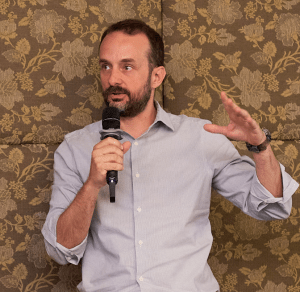
Can you tell us about your background and how you came to health economics?
I studied economics in Uruguay, and from early on I was interested in how economics works in the social sector, particularly in health. I focused my thesis on fertility adn women’s labor supply in Uruguay and then started working as a research assistant in health economics, before moving to the Ministry of Health during a major health reform. I worked there for four years in a newly created health economics unit, supporting the reform process.
Later, I had the opportunity to be a fellow in public health policy at Emory University. That led to an internship at PAHO in Washington, DC, where I stayed for some years. After that, I pursued a Master’s in Public Health with a specialization in health economics at LSHTM, and then returned to PAHO.
What drew you to work more specifically on immunization?
I started working on immunization economics in the last four to five years. When I first joined PAHO, I was working as a health financing specialist in the health systems department, through I was also managing part of the Gavi portfolio for the region. Then the pandemic came, and with COVAX, my work shifted to focus on supporting countries finance the effort of vaccinating millions of people in a very short time. I was also part of the regional review committee for the National Deployment and Vaccination Plans for COVID-19 vaccines. At that point, even as a health financing specialist, I was spending most of my time on immunization.
Vaccines had always interested me because they are among the most cost-effective interventions, with very high returns on investment, and people understand their value well. So when the Gavi support moved to a newly created special program unit focused on immunization, I moved from health financing to PAHO’s new comprehensive immunization department.
“Vaccines had always interested me because they are among the most cost-effective interventions, with very high returns on investment, and people understand their value well.”
Could you describe your current role at PAHO and the main areas you focus on?
As a Sustainable Immunization Financing Advisor at PAHO, I support countries in securing sufficient resources for immunization and making the best use of those resources. I also serve as a focal point for immunization financing for Gavi-supported countries in the region. My work covers many aspects of immunization economics, including financing, budgeting, costing, allocation of resources, and optimization.
What are some of the key projects or priorities you are currently working on?
One key area of work is supporting a few countries with comprehensive prospective costing of their immunization programmes. This includes a retrospective component to estimate current program costs, such as cost per dose and cost per fully immunized child, as well as a prospective component to estimate what resources would be needed to expand certain areas of the programme, such as introducing new vaccines or improving coverage, and helping countries understand the price tag of those options.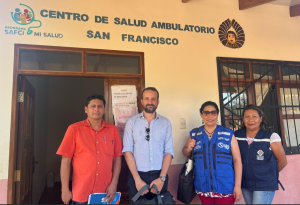
I am also part of a project to produce regional estimates of the return on investment in immunization over the last 50 years. There are already global estimates, but this work is intended to generate figures that more accurately represent the situation in the Americas.
More recently, I also started to look at optimization, particularly for PCV programmes. A lot of the optimization work has focused on modelling the potential health impact of shortening schedules, but there is also significant potential from a financial point of view given the high cost of the vaccine.
From your perspective, what are the most pressing challenges countries in the Americas face when it comes to financing and sustaining immunization programmes?
The Americas is a very heterogeneous region. It includes the largest economy in the world, but also small island states with populations under 60,000, and many of the issues are very context-specific.
That said, there are challenges that come up in many countries. One of the most common is that immunization programmes are under-resourced. We see this in very practical ways: resources are not allocated for fuel or outreach, cold chain equipment may be obsolete, and health workers may rely on their own phones and internet connection. This is still common in many countries, including upper-middle-income countries.
There are also major challenges related to fragmentation and public financial management, especially in decentralized countries. Roles and responsibilities are not always clear between municipalities and states, and different institutions may finance different parts of the programme under different rules for disbursement and procurement. That makes it difficult to ensure that resources are where they are needed at the right time.
Another challenge is that decisions are not always made with a full understanding of the economic impact, the trade-offs, and the sustainability issues. For example, a country may introduce a vaccine with donor support for the first cohort, but without fully considering long-term sustainability, or the trade-offs between introducing a new vaccine and investing in improving coverage of basic vaccines.
At the same time, the region also has key strengths, such as the PAHO Revolving Fund, which is a unique pooled procurement mechanism and a major advantage for countries in the region.
“Decisions are not always made with a full understanding of the economic impact, the trade-offs, and the sustainability issues”
You recently participated in the World Vaccine Congress as a delegate of the Immunization Economics Community of Practice. What were your main takeaways from the event?
One of the main takeaways for me was the issue of policy uncertainty and misinformation, including misinformation spread by policymakers in some countries, and this was a concern shared across both industry and the policy community.
Another takeaway was that there are many opportunities for collaboration between the for-profit and not-for-profit sides that could be positive for society. There is real space for collaboration in areas such as combination vaccines, where there could be gains in both programme efficiency and coverage.
I was also struck by the complexity of the whole chain of results, from vaccine innovation to adoption to financing. It is a very long process, with challenges at every stage, many of them linked to the policy landscape. It reinforced the importance of making the right decisions and creating the right policy environment and incentives along the way.
Finally, AI came up a lot in the discussions. There is clearly a lot of potential, but also a lot of uncertainty about what role it will actually play in research, development, and policy in the coming years.
Were there any sessions, discussions, or innovations that stood out to you in particular?
One session that stood out was on the economic value of vaccines. It included figures on vaccination in the United States, and despite knowing well the high return on investment for vaccines, seeing those numbers was shocking. One estimate suggested that childhood immunization in the US saved $2.7 trillion over a 20-year period.
There were also estimates on the cost of the measles outbreak in Texas: around $35–40 million for roughly 700 cases. Compared with the very low cost of the MMR vaccine, that is a striking contrast. Vaccines are highly effective and relatively inexpensive, and yet we are still having to make the case for investing in them.
Another session focused on sustainable, locally led immunization systems, including discussion from PATH and UNICEF. It highlighted many of the challenges around infrastructure and institutional capacity needed for countries to build vaccine supply systems end to end, while also leveraging global partnerships.
What would you say to early-career professionals interested in working in immunization economics?
I think everyone should build their own path, and one person’s experience is not necessarily useful as a model for someone else. That said, I would encourage young professionals interested in this field to consider the public policy side of immunization economics. Industry roles may seem appealing when starting off a career in health economics, but this is a field with lots of potential to develop your professional interests and there is a lot of joy in supporting decision-makers in government and knowing you are contributing to the public good.
“There is a lot of joy in supporting decision-makers in government and knowing you are contributing to the public good”
Finally, tell us a bit about your home country.
I’m from Uruguay, and I would encourage people to visit Uruguay and South America more broadly. Latin America is very diverse, with a lot of richness in the culture and amazing food.
Uruguay has a good mix of the energy of Latin America while also being a bit quieter, and it is a great place to learn more about the region and its culture. People should consider visiting, learning about the culture… and rooting for us at the next World Cup!
Are you interested in being featured in a future newsletter? Or would like to nominate another member? Please email immunizationeconomics@thinkwell.global with your suggestion and a brief description of your or their work. We are specifically interested in spotlighting the work and profiles of country researchers working on immunization economics.