

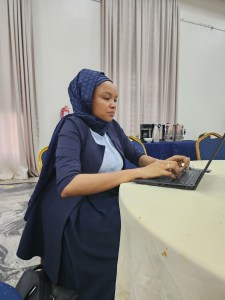
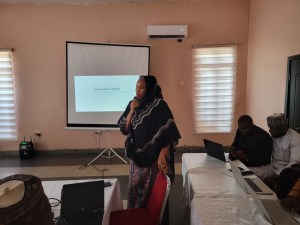
We recently met with Hadiza Salele, Associate at the Clinton Health Access Initiative (CHAI). At the Immunization Economics IHEA pre-congress, Hadiza presented on the cost of additional immunization sessions to reach children in Lagos, Nigeria. Find out more about this and Hadiza’s work on the intersection between gender and immunization below.
One of our key goals for this project was to review the different zero-dose reduction plans to assess how they have integrated gender and make recommendations on how to be gender intentional when implementing the zero-dose reduction operational plan. During this process, we worked with the Lagos team to understand the gender specific interventions being implemented, one of which being weekend vaccination sessions which is particularly important in Lagos state as it is a cosmopolitan local government area with a high proportion of women either being working class or working in the markets. We began to study the weekend vaccination sessions, their impact, and how cost-effective these sessions were.
What have been the main challenges you’ve encountered while doing this study?
One challenge is a general issue with data quality in Nigeria. In our study, we have found that weekend vaccinations have been reported as weekday sessions in some cases. Also, during the implementation of earlier zero-dose plans, the country was not specific about the definition of a zero-dose child, meaning that healthcare workers were documenting reaching zero-dose children who don’t fit the current definition of zero-dose.
What have been the most interesting findings?
We wanted to understand what the incremental costs of reaching children through weekend sessions are, and found that comparing our findings with other findings has been a bit challenging, we found a cost of $1.36 per dose delivered during those sessions, but when looking at the cost per zero-dose child reached, the unit cost increased as the number reached was lower. This means that the zero-dose funds were also used to strengthen immunization service delivery and not just reaching zero-dose children.
How do you think that the findings of your study will help the Nigerian government with the zero-dose reduction?
We hope that facilities continue to provide weekend vaccination and even expand it so that we can reach more working class women in these locations and in the long term. We hope that our findings will help inform government guidance documents that are being used to guide the delivery of health services.
You currently work as part of the Gender Programming Vaccines – how do gender disparities present when it comes to immunization and what needs to be done to reach equality?
One of the major gender issues in immunization is related to decision making as men tend to be seen as the head of the household and have the final decision-making power, and women must be granted permission to take children for immunization in some areas. There is limited male engagement through social mobilization, with efforts largely targeting female caregivers. There is also misinformation spread about the side effects of vaccines and limited awareness of the benefits. At facilities there is a lack of father-friendly seating space which have been reported to reinforce negative health care worker attitudes towards men who take their children for vaccination, which can be discouraging.
 Do gender issues tend to appear at the care-giver level rather than there being disparities in the numbers of girls and boys being immunized?
Based on evidence there is no significant disparity in terms of vaccination coverage between girls and boys, global and national evidence has shown that boys and girls are favored equally. However, we saw qualitative data from a rapid gender analysis conducted by UNICEF last year that showed some households prefer to vaccinate their boys over girls and vice versa in other locations, often due to a lack of trust in vaccines and influence from misinformation.
Uptake of evidence by the government in Nigeria have you found any kind of particular challenges or enabling factors for getting kind of economic evidence?
The country is making some efforts to consider economic evidence in program planning, resource allocation but this needs to improve significantly. Decision making is complex and there are many factors and information that goes into it, so it is important that we share economic evidence in such a way that it is easy to interpret by stakeholders, many of whom do not have economic background but will likely not flag if they cannot understand something.
You recently presented your work at the Immunization Economics pre-congress at IHEA in Bali, what was your experience and highlights of attending the event?
A key highlight for me was learning about the cost implications of implementing human-centered design interventions in other low- and middle-income countries, as well as the comparative costs of delivering vaccines in rural settings. The discussions also underscored the pressing need for standardized methodologies to generate comparable costing data, which is critical for informing sound decision-making. I was also excited to engage with new concepts such as vaccine prioritization and optimization, which opened my eyes to innovative ways of utilizing limited resources more strategically to improve efficiency and equity in vaccine delivery.
The discussions at the Immunization Economics pre-congress underscored the need for standardized methodologies to generate comparable costing data, which is critical for informing sound decision-making
Could you share with us also just like the next project you’re working on?
 I’m excited to be working on a project to implement a strategy called Bridge (boosting reach to humanization through gender responsive engagement) to reach male and female caregivers and address the issues that lead to vaccine hesitancy. We plan to engage the existing female community volunteers to sensitize the female caregivers to address vaccine hesitancy. If levels of vaccine acceptance don’t increase, the female caregiver will link up with a male immunization champion who will sensitize the father. We will set up vaccination appointments with the caregivers and share reminders, monitoring the compliance from end to end and collecting data on Penta1 uptake before and after the intervention.
Are you interested in being featured in a future newsletter? Or would like to nominate another member? Please email immunizationeconomics@thinkwell.global with your suggestion and a brief description of your or their work. We are specifically interested in spotlighting the work and profiles of country researchers working on immunization economics.