
This month we met with Carol Kamya, a Health Economist from Uganda. Carol has an interdisciplinary background in public health, health economics, and politics. She is currently obtaining her PhD in Health Economics at the University of Bergen
Carol, can we start off by you introducing the study you are leading on the cost of reaching zero-dose children?
Yes, so this work has been commissioned by Gavi and forms part of the Zero-Dose Learning Hub. Uganda is one of the four Country Learning Hubs established to generate evidence on how to identify and reach zero-dose children based on the Identification-Reach-Monitoring-Measurement-Advocacy (IRMMA) framework. One of the specific objectives is to determine the implementation outcomes (i.e., acceptability, cost, sustainability, and effectiveness) of existing and planned immunization approaches to reaching zero-dose children, under-immunized children, and missed communities in Uganda.
What are the approaches you are examining in your study?
We initially wanted to examine planned activities in the Equity Accelerator Fund (EAF), but since there have been delays with the grant, we decided to evaluate the cost and outputs of a countrywide big-catch up campaign targeting zero-dose and under-immunized children conducted in November 2024. The costing study aims to estimate the incremental cost of identifying and reaching the zero-dose and under-immunized child through house-to-house registration and targeted outreaches in Uganda, implemented during the campaign.
How is the study designed?
It is a retrospective costing study using the government perspective. We examined the costs incurred at the district level down to the community level and used a combination of bottom-up and activity-based approaches to quantify and value inputs. Our intention is to obtain the cost per zero-dose child vaccinated. A secondary outcome is to estimate the cost per child identified through house-to-house registration.
What have been your major findings?
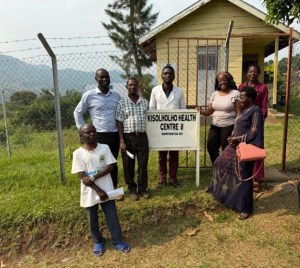
We are still analyzing the data, but the preliminary findings show that the cost per zero dose child vaccinated is about US$30, including financial and economic costs. We found that personnel time is a large cost driver, especially for the identification of zero-dose children but also meetings and trainings, primarily because the zero-dose concept is new requiring sensitization for health care workers and communities. Most economic costs were driven by labor contributions from Village Health Teams, who were crucial in registering and mobilizing children for vaccination. Village Health Team members are critical to identifying zero-dose children but are not paid formally. The actual financial per diem they receive is less than what some of them can earn in a day elsewhere, impacting their effectiveness.
What are the policy and programming implications of these findings?
The Ministry of Health is interested in obtaining the unit cost per zero-dose child vaccinated from this study. This information will help inform programming for the Equity Accelerator Fund (EAF), assist in budgeting for upcoming interventions, and serve as a potential financial advocacy tool. They are particularly keen on the identification aspect, as it could lead to more effective and targeted outreach delivery.
How do you see the zero-dose interventions evolving?
Countries should consider and design innovative approaches to improve implementation efficiency in identifying and reaching zero-dose children. For example, utilizing digital tools and mobile health technologies can help register and track defaulters (see Carol’s presentation at IHEA 2023). Additionally, integrating immunization with other health services, such as antenatal care and nutrition programs, could reduce the costs of identifying and reaching zero-dose children.
What can other low-and middle-income countries learn from the work of the Uganda Zero Dose Learning Hub?
Like many countries, Uganda has an issue with accurately defining target populations or the denominator needed to capture coverage. Most countries have a census or certain projection figures, but they don’t seem to trickle down to the implementation level. That is, where the house-to-house registration seems to have been useful in Uganda. For this reason, Village Health Teams or community extension workers are key players in the identification of these children.
Another big lesson is that the zero-dose burden is a moving target that requires routine assessments to align interventions with changing situations. The health system must be adaptable to effectively reach zero-dose children.

Can you elaborate on other immunization economics projects you have worked on?
I supported the Gavi full country evaluation in Uganda from 2013 until 2018 and the evaluation of urban immunization in Uganda from 2017-2021. During the full country evaluation, I was particularly involved in a resource tracking component that examined the financial envelope available for immunization for over five years. We found that while the financial envelope had increased during that period, the government share had declined. The findings helped advocate for additional domestic funding for immunization and raised concerns over the reliance on external funding to support this crucial program. It is always a nice feeling when the program utilizes your findings!
What are the current immunization priorities facing the government of Uganda?
In April 2025, with Gavi’s support, Uganda introduced the R21 malaria vaccine, aiming to reach over one million children. Integrating this vaccine into existing activities is high on the government’s agenda, although the four-dose schedule adds complexity to its introduction. I would like to conduct an economic evaluation of the R21 malaria vaccine rollout.
Additionally, sustainability is now a key priority in light of the recent cuts in foreign assistance from the United States. There is a shift in focusing on interventions they can fund independently (for example, strengthening routine immunization) rather than those driven entirely by partners.
Finally, where is your favorite place to travel?
One of my favorite places is Kisoro District, located in the southwestern corner of Uganda. This hidden gem offers a wealth of exciting scenery, surrounded by the Virunga Mountains and featuring beautiful lakes. It’s a perfect spot for both relaxation and adventure. Plus, it hosts mountain gorillas, so you can go gorilla trekking!
Are you interested in being featured in a future newsletter? Or would like to nominate another member? Please email immunizationeconomics@thinkwell.global with your suggestion and a brief description of your or their work. We are specifically interested in spotlighting the work and profiles of country researchers working on immunization economics. See our previous profiles below.


